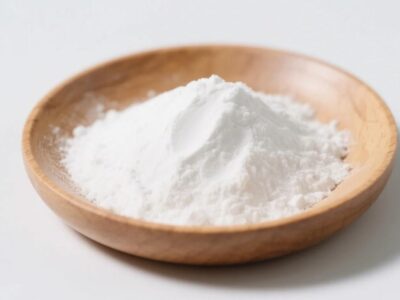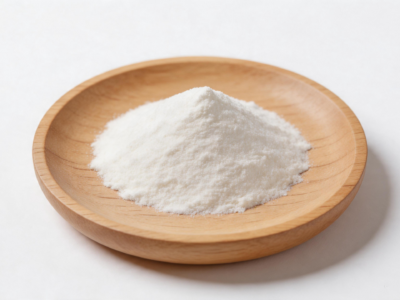
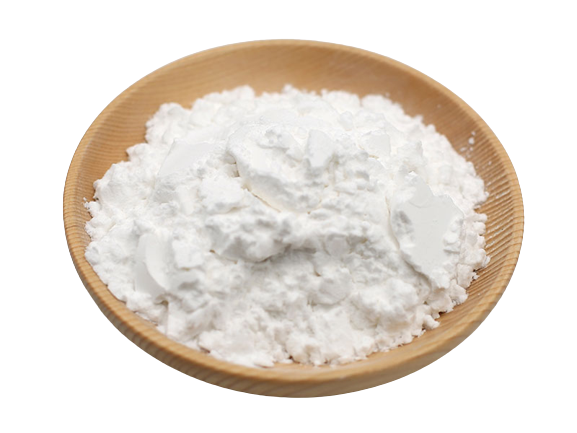
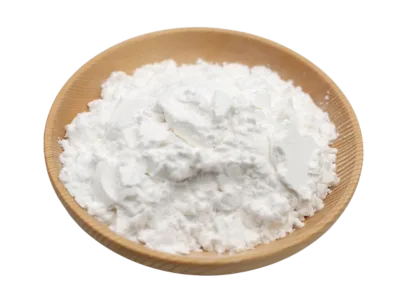
Our pea starch powder is a refined carbohydrate extracted fromyellow peas (Pisum sativum) using a gentle, water-based separation process—free from chemical solvents, sulfites, or synthetic additives. With a neutral flavor, bright white color, and smooth texture, it delivers superior thickening, gelling, and binding performance while aligning with clean-label, non-GMO, and plant-based trends.
As a byproduct of pea protein production, our pea starch supports circular agriculture and offers an allergen-friendly alternative to corn, wheat, and potato starches.
What Is Pea Starch?
Pea starch is the purified starch fraction obtained during the wet-milling of split yellow peas. Our pea starch powder undergoes washing, centrifugation, and low-temperature drying to preserve its native granular structure—resulting in a product with balanced amylose/amylopectin ratio (~30% amylose) that provides:
- Moderate viscosity development
- Good gel strength
- Moderate freeze-thaw stability
- Moderate clarity in gels and sauces
Unlike modified starches, our product is native (unmodified) and complies with “no artificial ingredients” labeling standards worldwide.
Technical Specifications
| Parameter | Pea Starch Powder |
|---|---|
| Botanical Source | Yellow peas (Pisum sativum) |
| Appearance | Bright white, fine free-flowing powder |
| Odor & Taste | Odorless; neutral, no aftertaste |
| Starch Content (Dry Basis) | ≥85% |
| Moisture Content | ≤12.0% |
| Protein (N × 6.25) | ≤1.0% |
| Ash Content | ≤0.5% |
| pH (10% slurry) | 6.0 – 7.5 |
| Whiteness (L value)* | ≥92 (CIE Lab* scale) |
| Particle Size (D[4,3]) | 15–25 µm |
| Paste Viscosity (Brabender, 95°C) | 300–600 BU (varies by batch) |
| Gel Strength (10% gel, 24h @ 4°C) | Firm, non-syneretic |
| Shelf Life | 24 months (stored sealed in cool, dry place) |
| Heavy Metals (Maximum Limits) | |
| – Lead (Pb) | ≤0.2 mg/kg |
| – Arsenic (As) | ≤0.1 mg/kg |
| – Cadmium (Cd) | ≤0.05 mg/kg |
| – Mercury (Hg) | ≤0.01 mg/kg |
| Microbiological Criteria | |
| – Total Plate Count | ≤10,000 CFU/g |
| – Yeast & Mold | ≤100 CFU/g |
| – Escherichia coli | Absent in 1 g |
| – Salmonella spp. | Absent in 25 g |
| – Listeria monocytogenes | Absent in 25 g |
| Allergen Status | Gluten-Free (<5 ppm), Soy-Free, Dairy-Free, Nut-Free, Corn-Free |
| Certifications | Non-GMO Project Verified, Kosher, Halal (available), Gluten-Free Certified |
Analytical methods: AOAC for moisture/protein; ISO 6647 for starch content; Brabender Viscoamylograph for pasting profile.
Sourcing, Certification and Regulatory Status
| Jurisdiction / Standard | Regulatory status | Legal name | Notes |
|---|---|---|---|
| European Union | Food ingredient; treated as a starch rather than as a food additive | Pea starch | Label declaration follows Regulation (EU) No 1169/2011 and may read pea starch or simply starch. Pea is not a cereal containing gluten, so no cereal source has to be named, and a gluten-free claim is governed by Regulation (EU) No 828/2014. Use history and process settle novel-food status: Regulation (EU) 2015/2283 catches a production process not used in the Union before 15 May 1997 that changes the composition or structure of the material, so the status of a specific process has to be confirmed for the destination market. Organic grades are covered by Regulation (EU) 2018/848. Native starch is a food ingredient rather than a food additive, so the additive regulation (EC) No 1333/2008 does not apply to it; the modified grades are the ones that carry E numbers. |
| United States | Conventional food ingredient; no starch-specific authorisation applies | Pea starch | FDA’s rule for modified food starch (21 CFR 172.892) does not specify any particular botanical source of food starch. Pea is not one of the major food allergens that must be declared under section 403(w) of the Federal Food, Drug, and Cosmetic Act. A gluten-free claim has to meet 21 CFR 101.91 (below 20 ppm). |
| Japan | Food ingredient; handled as an ingredient rather than as a designated additive | Pea starch | Native starch sits on the ingredient list under the starch class name; the chemically modified starches are the designated food additives and may be labelled with the simplified name 加工デンプン. Organic product for Japan is certified to the Japanese Agricultural Standards (JAS). |
| Codex Alimentarius | Food ingredient; no commodity standard covers pea starch | Pea starch | CXS 192-1995, the General Standard for Food Additives, carries the provisions for modified starches as thickeners and stabilisers (INS 14xx) rather than for the native material; contaminants fall under CXS 193-1995. No Codex commodity standard covers pulse starches either, so the starch itself is traded against the general texts and the contract specification. |
Compliance for pea starch turns on the starch content, the residual protein and the microbiological limits rather than on the naming convention, so those are the figures to line up when comparing offers. The two numbers that decide most plant-based and gluten-free projects are the ≥85% starch figure and the ≤1.0% protein figure, since the second one sets how the material behaves in a system that has to stay under an allergen and gluten threshold. Confirm the legal name and the permitted use with the destination market before the first shipment.
Applications
- Plant-Based Meat & Seafood: Binds moisture, improves bite and juiciness
- Gluten-Free Baking: Enhances crumb structure in breads, cakes, and pastries
- Sauces, Gravies & Soups: Provides smooth mouthfeel and glossy finish
- Dairy Alternatives: Stabilizes plant-based yogurts and creamers
- Frozen Foods: Prevents ice crystal formation and water separation
- Baby Food & Clinical Nutrition: Easily digestible, naturally gluten-free thickener
Tip: For higher viscosity or cold-water swelling, consider blending with tapioca or arrowroot starch.
Format and Grade Selection
Two questions are settled before a specification is agreed: whether the process heats the starch, and how tight the protein ceiling has to be. Both follow from the application rather than from the label.
- Native pea starch – the default for cooked, retort and baked systems, where the granular structure is allowed to gelatinise in the process itself
- Pregelatinized grade – the cold-water-swelling option, chosen where the formulation has no cook step or where a dry mix has to thicken on reconstitution
- Starch content and protein read together – the ≥85% starch and ≤1.0% protein figures are a pair; a high starch figure with a drifting protein figure will taste and behave differently in a gluten-free system
- Paste viscosity – 300–600 BU is a batch range, so the batch curve, not the catalogue figure, is what a dosage should be set against
- Gel behaviour – a firm, non-syneretic gel on cooling suits fillings and plant-based binders, but the same gel is too firm for a pourable sauce
- Particle size and whiteness – D[4,3] 15–25 µm and an L value of ≥92 decide how the powder disperses in a dry blend and how it reads in a light-coloured product
Handling Note: Pea starch needs heat to gelatinise and builds its gel on cooling, so a formulation that is never heated will not thicken on this grade alone. Where a cold process is fixed, ask for the pregelatinized cut rather than raising the dosage, because extra native starch will only thicken the slurry once the product is warmed.
The grade and the process window are declared per batch, so the certificate can be checked against the specification line by line. Tell us the application, the process temperature and whether the finished product is frozen or retorted, and we will quote the grade and the pregelatinized option that fit.
Why Choose Our Pea Starch?
Our starch is produced in dedicated allergen-controlled facilities. The extraction process uses only water and mechanical separation—ensuring a pure, native starch that meets the highest standards for sustainability and food safety.
Every batch includes full documentation: Certificate of Analysis (CoA), Allergen Statement, and Safety Data Sheet (SDS).
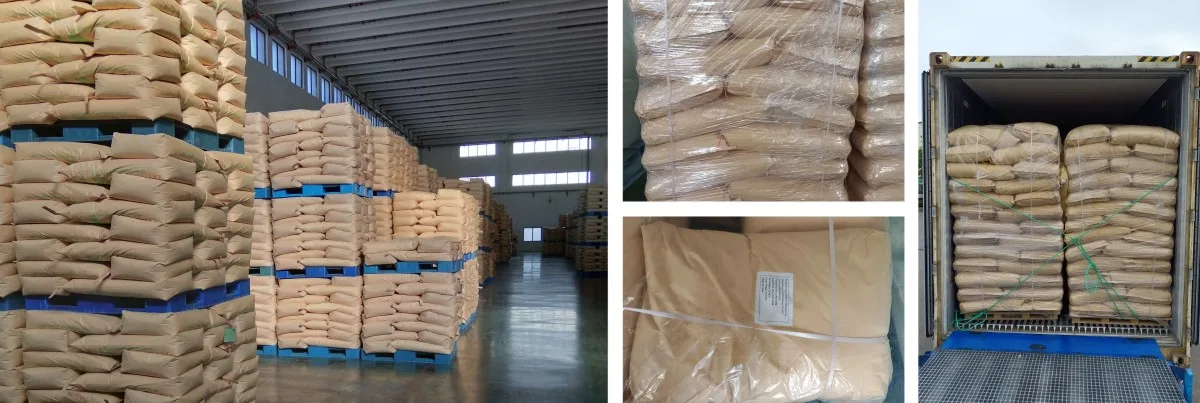
Available packaging:
- 25 kg multi-wall paper bags with food-grade PE liner
- 500 kg–1,000 kg FIBCs for industrial users
- Custom packaging available upon request
Packing
Also Known As: Names and Synonyms in the Trade
Pea starch moves under a handful of names, and the one a document uses tends to identify the reader’s sector: the botanical form on a cosmetic declaration, the Latin title on an excipient file, or the category name used when a buyer is quoting pulse starches as a group. The list below covers the forms that come up most often in enquiries and technical data sheets.
- Pisum sativum starch – the botanical-source form used on cosmetic ingredient declarations (INCI) and on technical data sheets for the same material
- Pisi amylum – the Latin form recorded for starch from peas in excipient reference lists, used where a pharmacopoeial-style name is expected
- Yellow pea starch – the commercial name tied to the raw material, since the starch is separated during the wet milling of split yellow peas
- Pulse starch – the category name used across the trade for the starches extracted from peas, chickpeas and lentils, where a supplier is describing the group rather than one source
- Native (unmodified) pea starch – the form supplied here, as distinct from the pregelatinized or chemically modified grades that carry additive names in some markets
- Starch, pea (CAS 9005-25-8) – the registry entry quoted on certificates of analysis; the number is shared with starch generally, so the botanical source has to be stated separately
The name on the label has to match the name on the specification sheet, and the sheet has to state the botanical source, the starch content and the protein ceiling. Pea flour and pea protein are not the same material: both carry far more protein than the ≤1.0% this specification allows, and they behave differently in a gluten-free system. Where a document says only “starch”, ask which source it was milled from before substituting one offer for another.
FAQs
Q: Can pea starch replace cornstarch?
A: Yes! Use a 1:1 ratio for thickening, with superior clarity and heat resistance.
Q: Does it work in cold recipes?
A: Requires heating to fully gelatinize, but pre-gelatinized options are available.
Q: Is this product allergen-free?
A: Yes—free from gluten, soy, nuts, and dairy.
Q: Do you offer bulk pricing?
A: Yes! Competitive rates for 25kg+ orders. Contact us for quotes.